Loading..

Benefits of Managed IT Services for Businesses

Benefits-of-managed-IT-services

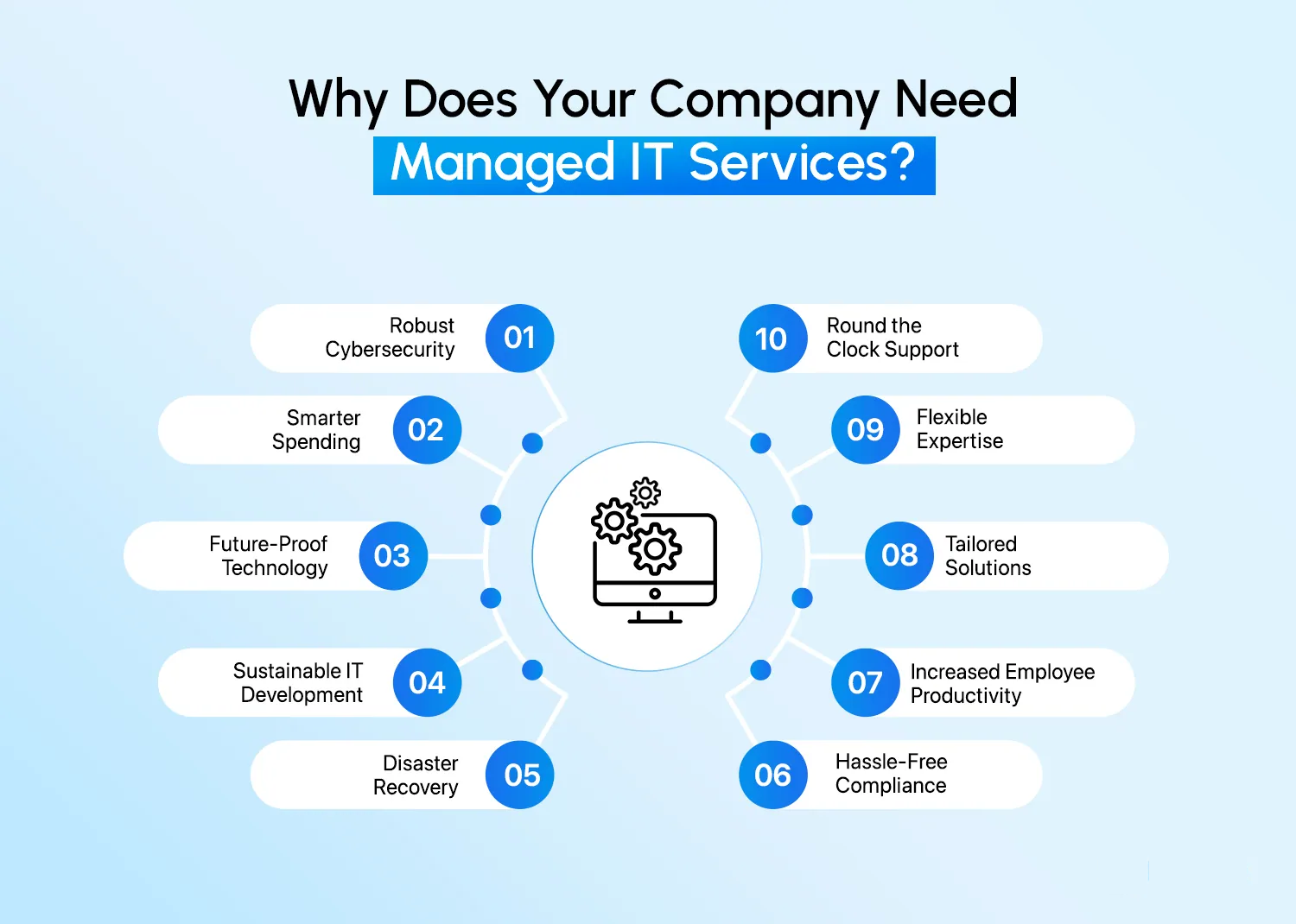
Technology has become the backbone of modern businesses. From managing internal operations to enabling communication, collaboration, and data security, IT infrastructure plays a critical role in business success.

However, managing complex IT environments internally can be challenging, costly, and resource-intensive. Many organizations are now turning to managed IT services to streamline operations, reduce costs, and improve system reliability.

Managed IT services allow businesses to outsource IT management to specialized providers who monitor, maintain, and optimize technology infrastructure.

For business leaders and decision makers, managed IT services offer a strategic way to enhance operational efficiency while focusing on core business objectives.

In this article, we explore the key benefits of managed IT services for businesses and why organizations are increasingly adopting this approach.

Reduced IT Costs and Predictable Budgeting

One of the biggest advantages of managed IT services is cost control. Maintaining an internal IT department requires hiring skilled professionals, investing in infrastructure, and continuously upgrading technologies.

Managed IT service providers offer businesses a predictable pricing model, usually through a monthly subscription. This allows organizations to plan their IT budgets more effectively while avoiding unexpected expenses related to system failures or emergency repairs.

Businesses benefit from:

  • Lower operational costs
  • Lower operational costs
  • Reduced need for in-house IT staffing
  • Access to enterprise-level technology without large capital investments

For growing organizations, managed IT services provide a cost-effective way to maintain a reliable IT infrastructure without significant overhead.

Proactive IT Monitoring and Maintenance

Traditional IT management often relies on reactive support, where issues are addressed only after they occur. This approach can lead to downtime, productivity loss, and frustrated employees.

Managed IT service providers use proactive monitoring tools to detect potential issues before they disrupt business operations.

By continuously monitoring networks, servers, and applications, IT experts can identify vulnerabilities and resolve problems early.

Proactive monitoring helps businesses:

  • Prevent system failures
  • Reduce downtime
  • Improve system performance
  • Ensure continuous business operations

This proactive approach ensures that technology systems remain stable, reliable, and optimized for performance.

Enhanced Cybersecurity Protection

Cybersecurity threats are increasing rapidly, and businesses of all sizes are becoming targets for cyberattacks.

Data breaches, ransomware attacks, and phishing campaigns can cause severe financial and reputational damage.

Managed IT service providers implement comprehensive cybersecurity strategies to protect business systems and sensitive data.

Key cybersecurity benefits include:

  • Continuous threat monitoring
  • Firewall and network protection
  • Data encryption and backup solutions
  • Vulnerability assessments
  • Security compliance support

With managed IT services, businesses gain access to experienced security professionals who stay updated on the latest cyber threats.

Access to IT Experts and Advanced Technologies

Hiring and retaining experienced IT professionals can be difficult and expensive.

Managed IT services provide businesses with access to a team of skilled specialists with expertise in multiple technologies such as:

  • Cloud infrastructure
  • Cyber-security
  • Enterprise networking
  • Software systems
  • IT architecture

Instead of relying on a limited internal IT team, businesses gain the expertise of an entire IT support team.

This leads to faster problem resolution, better technology decisions, and improved system performance.

Improved Business Productivity

When IT systems fail or slow down, employee productivity can suffer.

Technical issues, system outages, and slow networks can interrupt daily operations and reduce efficiency.

Managed IT services help maintain reliable systems and fast network performance so employees can focus on their work.

Benefits include:

  • Faster system performance
  • Reduced downtime
  • Quick technical support
  • Optimized network infrastructure

With a stable IT environment, employees can collaborate more efficiently and maintain high productivity.

Scalability and Support for Business Growth

As businesses grow, their IT infrastructure must evolve to support new technologies and increased workloads.

Managed IT services provide scalable solutions that grow alongside your business.

Service providers can quickly adjust resources, upgrade systems, and implement new technologies without disrupting operations.

This allows businesses to:

  • Scale IT infrastructure easily
  • Adopt new technologies faster
  • Support remote and hybrid work environments
  • Expand operations without major IT challenges

By partnering with a managed IT service provider, organizations ensure their technology infrastructure supports long-term growth.

Frequently Asked Questions

What are managed IT services?
Managed IT services involve outsourcing IT management and support to specialized providers who monitor and maintain business technology systems.
Why do businesses use managed IT services?
Businesses use managed IT services to reduce IT costs, improve cybersecurity, and ensure reliable technology infrastructure without maintaining a large internal IT team.
Are managed IT services suitable for small businesses?
Yes. Managed IT services are ideal for small and medium businesses because they provide access to enterprise-level expertise without the high cost of hiring a full IT team.
How do managed IT services improve cybersecurity?
Managed service providers implement security tools, monitor threats, perform vulnerability assessments, and ensure systems are regularly updated.
What services are included in managed IT services?
Managed IT services typically include:
  • Network monitoring
  • IT help desk support
  • Cyber-security management
  • Cloud infrastructure management
  • Data backup and disaster recovery
  • System maintenance and updates

Conclusion

Managed IT services have become a strategic solution for businesses looking to improve efficiency, strengthen security, and optimize IT operations.

By outsourcing IT management to experienced professionals, organizations can reduce costs, enhance cybersecurity, and maintain reliable technology infrastructure.

Businesses that leverage managed IT services are better positioned to adapt to new technologies, support digital transformation, and achieve long-term growth.

Leave a Reply

Your email address will not be published. Required fields are marked *

Related Posts